Early Activism
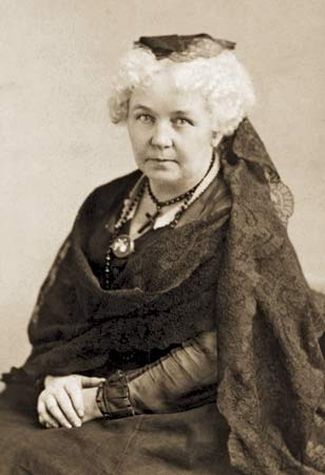
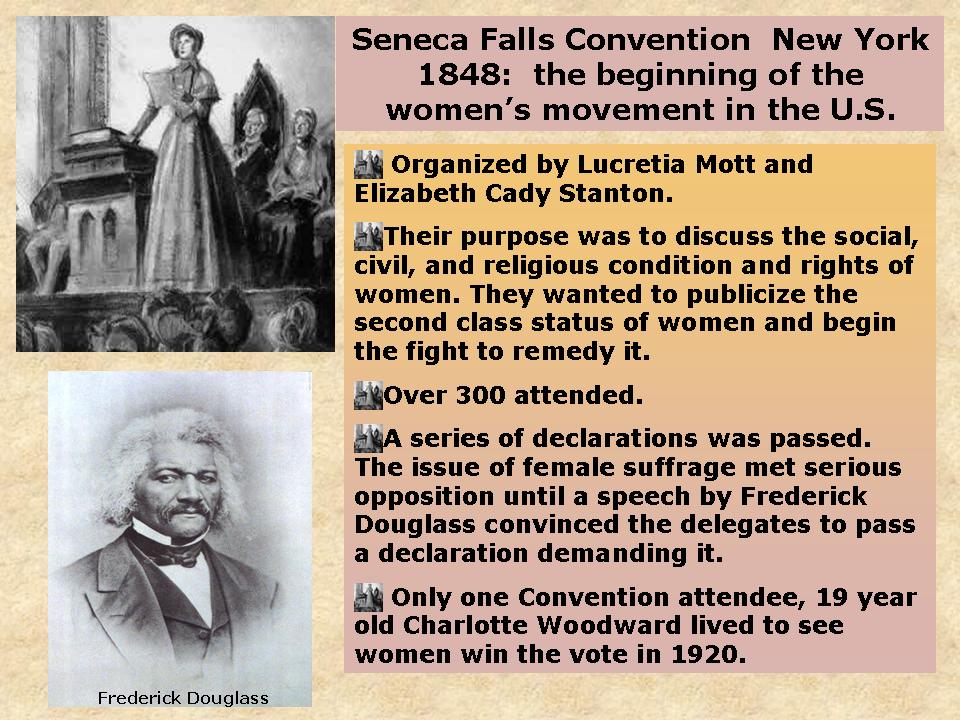
In 1843 Henry Stanton was admitted to the bar. Henry and Elizabeth moved to Boston in order for Henry to practice law. This gave Elizabeth the chance to meet many "noble men and women among reformers." During the winter in Boston Elizabeth attended every lecture, church, theater, concert, and prison-reform convention she could. In the summers they went to Chelsea and stayed with Rev. John Wesley Olmstead, a Baptist minister, soon to be the editor of The Watchman and Reflector. Rev. Olmstead was married to Elizabeth's cousin Mary Livingston. In 1843 Daniel Cady moved to Albany. This enabled Elizabeth to stay winters at the Capital and become involved in the discussion of the Married Woman's Property Bill which at the time was pending in the legislature. The bill would not pass until 1848. In March of 1844 Elizabeth's second son was born in Albany but the Stanton's returned to Chelsea where Elizabeth took up housekeeping. They purchased a new house, and new furniture. The house had beautiful views of Boston Bay and Elizabeth felt that she had all she could want for. She was very proud of her new home and her occupations as wife, mother, and housekeeper. Henry was starting a new business which kept him away a lot so Elizabeth kept herself occupied. In 1847 Henry, Elizabeth, and their three children moved to Seneca Falls, N.Y. They would live in Seneca Falls for sixteen years and have four additional children. Elizabeth's life became somewhat depressing when she moved to Seneca Falls because she lived outside of town and did not have the circle of friends that she had in Boston. Additionally, Henry was away a lot and her servants weren't as effective as the ones she had in Boston. Also, her children had increased in number leaving her with very little free time. The idea of running a proper and orderly home had grown old. Elizabeth felt as if she "suffered with mental hunger, which, like an empty stomach, is very depressing." She states in her autobiography that "the general discontent I felt with woman's portion as wife, mother, housekeeper, physician, and spiritual guide, the chaotic conditions into which everything fell without her constant supervision ... impressed me with a strong feeling that some active measures should be taken to remedy the wrongs of society in general, and of women in particular (Stanton, 1993/1898). With her recent personal experiences Elizabeth became compelled to have a public meeting to protest the legal wrongs and oppressions of women. Elizabeth went to visit her friend Lucretia Mott and they decided to call this public meeting "Woman's Rights Convention." They wrote the announcement that same day and published it in the Seneca County Courier the following day. The announcement read as follows: "A Convention to discuss the social, civil, and religious condition and rights of women will be held in the Wesleyan Chapel, at Seneca Falls, N.Y., on Wednesday and Thursday, the 19th and 20th of July current; commencing at 10 o'clock A.M. During the first day the meeting will be exclusively for women, who are earnestly invited to attend. The public generally are invited to be present on the second day, when Lucretia Mott, of Philadelphia, and other ladies and gentlemen, will address the Convention."(Copied from:http://www.history.com/this-day-in-history/seneca-falls-convention-begins). Click Here to learn more about the convention. The main managers of the event were: Elizabeth Cady Stanton, Lucretia Mott, Mary Ann McClintock, Jan Hunt, and Martha C. Wright. After the Seneca Falls Convention, Elizabeth agreed to attend another convention in Rochester. From there she attended a series of conventions that took place each year. She was invited to speak at several locations and Quaker meeting houses in the neighborhood. In her autobiography Elizabeth states that after she became involved in speaking at the conventions that with these "new duties and interest, and a broader outlook on human life, my petty domestic annoyances gradually took a subordinate place." She had begun to write articles, letters to conventions, and private letters to engage people in thinking about women's issues. (Stanton, 1993/1898), ( Buhle, M.J. &Buhle. P), & (Gurko, 1974) |
||||
The Declaration of Sentiments from the Seneca Falls Convention, 1848 When, in the course of human events, it becomes necessary for one portion of the family of man to assume among the people of the earth a position different from that which they have hitherto occupied, but one to which the laws of nature and of nature's God entitles them, a decent respect to the opinions of mankind requires that they should declare the causes that impel them to such a course. Click Here to read about Elizabeth's later years. |
Suffrage Timeline: http://memory.loc.gov/ammem/vfwhtml/vfwtl.html The Seneca Falls Convention The historic meeting took place at the Wesleyan Church chapel in Seneca Falls. Despite the plan to have the first day for women only, a large crowd of both men and women sought entry to the locked chapel. A male professor from Yale volunteered to enter through an open window and once the doors were opened, the crowd streamed in. Approximately 100 to 300 people were in attendance, including many men who supported the idea of women's rights. Although the majority was Caucasian, there were also some African Americans in attendance. Because none of the women felt capable of overseeing the proceedings, James Mott presided. On the first day, Elizabeth Cady Stanton presented the organizers' Declaration of Sentiments and Resolutions. The Seneca Falls declaration was carefully patterned on the Declaration of Independence that had been crafted by the colonial revolutionaries. The declaration written primarily by thomas jefferson stated that all men are created equal. The Seneca Falls declaration held that "all men and women" are created equal and are endowed with inalienable rights including life, liberty, and the pursuit of happiness. The Declaration of Independence listed 18 charges against George III, the king of England. The Declaration of Sentiments described 18 charges of "repeated injuries and usurpations on the part of man toward woman" including the denial of the right to vote, unfair laws regarding separation and divorce, and inequality in regard to religion, education, and employment. It stated the hope that the convention in Seneca Falls would be followed by a series of conventions throughout the country. The 12 resolutions enunciated in the Declaration of Sentiments called for the repeal of laws that enforced unequal treatment of women, the recognition of women as the equals of men, the granting of the right to vote, the right for women to speak in churches, and the equal participation of women with men in "the various trades, professions, and commerce." After much discussion and debate, the Declaration of Sentiments and Resolutions was passed largely as written. The biggest obstacle was the resolution that called for women's right to vote, known as woman suffrage. Numerous attendees, men and women alike, felt that the right to vote was too radical an idea to gain public acceptance. Lucretia Mott was open to discarding the resolution, but Stanton held firm with strong support from the prominent African–American abolitionist frederick douglass. After Douglass stated that "Suffrage is the power to choose rulers and make laws, and the right by which all others are secured," the woman suffrage resolution passed by a very narrow margin. After two days of vigorous discussion and debate, 100 women and men signed the Seneca Falls Declaration, although some later removed their names after being subjected to intense criticism. A storm of sarcasm and protest broke out after the convention prompting Frederick Douglass to write that a discussion of animal rights would have brought forth less opposition than a call for women's rights. James Gordon Bennett, publisher of the widely read New York Herald, published the entire declaration as a gesture of ridicule. Welcoming the publicity, Stanton and many of the Seneca Falls attendees hailed Bennett's move as a way to disseminate their message on a broader scale. Copied from: http://www.encyclopedia.com/topic/Seneca_Falls_Convention_1848.aspx In 1851 Elizabeth Stanton was introduced to Susan B. Anthony by Amelia Bloomer. Mrs. Anthony was walking to a friend's house and Elizabeth was walking home, both had just attended an antislavery meeting. They stopped on the street corner to talk. The women took an instant liking to each other. Later that same day they spent hours discussing temperance, abolition, and women's rights. Elizabeth and Susan formed a life-long friendship from this point on. Elizabeth Cady Stanton was an excellent public speaker and writer while Susan B. Anthony was good at collecting and organizing facts, assembling materials, and organizing meetings. In the early years because Elizabeth had family demands that Susan did not, Elizabeth would write the speeches and Susan Anthony would deliver them. After Elizabeth was able to travel more, Susan would arrange the meetings and Elizabeth would take the stage and give enthusiastic speeches. In 1852 Stanton and Anthony founded the Women's New York State Temperance Society. In 1856 Susan B. Anthony became an agent of the American Anti-Slavery Society. (Gurko, 1974) & ( Stanton, 1993/1898) & (http://ecssba.rutgers.edu/) This outfit was called Bloomers, named after Amelia Bloomer. Elizabeth Cady Stanton and Susan B. Anthony both wore these outfits beginning in 1851. The outfits made people view them as radicals. Later, the women stopped wearing them to their speeches because they wanted people to listen to their views and not discount them because of their outfits. (Gurko, 1974) |
|||